Have you ever noticed that milk is almost always at the back of the supermarket? That the smell of fresh bread hits you near the entrance? That the most eye-catching promotions are positioned exactly at eye level, while own-brand alternatives sit lower down, as if waiting patiently to be discovered?
It's not a coincidence. It's strategy.
Large supermarkets are environments designed with an almost architectural level of care. Every square metre is intentional, every department placed with a clear purpose: to slow you down, to make you look, to make you buy more than you planned when you walked through the door.
And it works. For almost everyone.
The store as a gentle maze
Retail design experts call it the store journey — the path a customer takes through the shop floor. It's not a neutral route: it's a carefully engineered sequence of stimuli, emotions and temptations, refined over decades of studying how people shop.
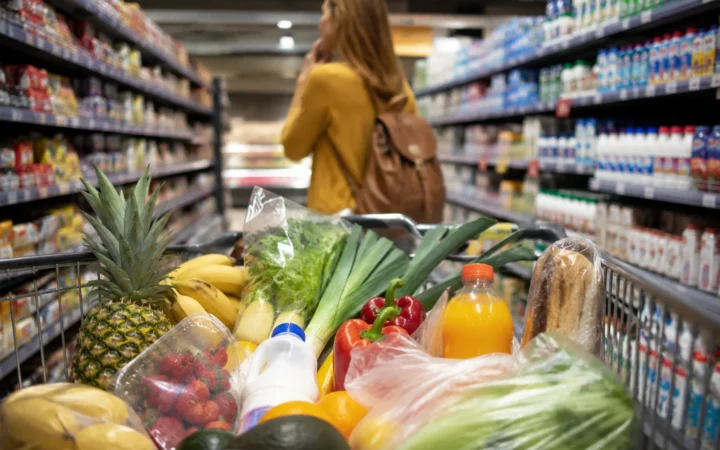
The underlying principle is simple: the longer you stay inside, the more you spend. Not because you're irrational, but because the environment is built to trigger impulse decisions, slow your pace and widen your field of vision toward everything you didn't put on your list.
Fresh produce departments — fruit, vegetables, bread, flowers — are almost always placed near the entrance or in high-traffic zones. The reason? Those vivid colours, familiar smells and sense of abundance activate something deep in us. They put us in a good mood. And people in a good mood spend more.
Essential products — milk, eggs, butter, pasta, washing powder — are strategically distributed across the four corners of the store. To reach them, you have to pass through everything else. It's geometry in service of margin.
The central aisles, the longest and least essential to navigate, are home to packaged goods, tinned food, snacks — everything useful but not urgent. Those aisles exist to intercept you while you're already moving, trolley open, guard down.
Eye level is never an accident
There's an unwritten rule in grocery retail: the shelf that sells is the one you can see without effort. Between roughly 120 and 170 centimetres from the floor, you'll find the highest-margin products, the brands that pay for that position, the references the store wants to move. Lower down sit the cheaper alternatives — often equivalent in quality — quietly waiting to be noticed by those who look.
Equally, the end caps — those highly visible corner positions at the head of each aisle — aren't filled with promotional items out of generosity. They're commercial real estate, rented by major brands to guarantee visibility at the exact moment your trolley turns.
Time as a resource to be dissolved
One detail almost nobody notices: many supermarkets have no windows. No natural light to mark the passing of time. No visible clocks. The artificial lighting is constant, engineered to feel welcoming without being drowsy. The goal is for you to lose track of how long you've been there — for the shop to become an almost timeless experience, at least until you're already at the checkout with a full trolley.
Even the music follows precise logic. Slower tempos increase dwell time; faster rhythms are used during peak hours to keep people moving. It's not background noise — it's acoustic design.
The shopping list as an act of (gentle) resistance
To be clear: none of this is sinister. Supermarkets are businesses, and like all businesses they aim to maximise revenue. The issue isn't the supermarket — it's going in without a plan.
One app for your whole household
Shopping lists and loyalty cards on every device — free to start, Pro when you want to share in real time.
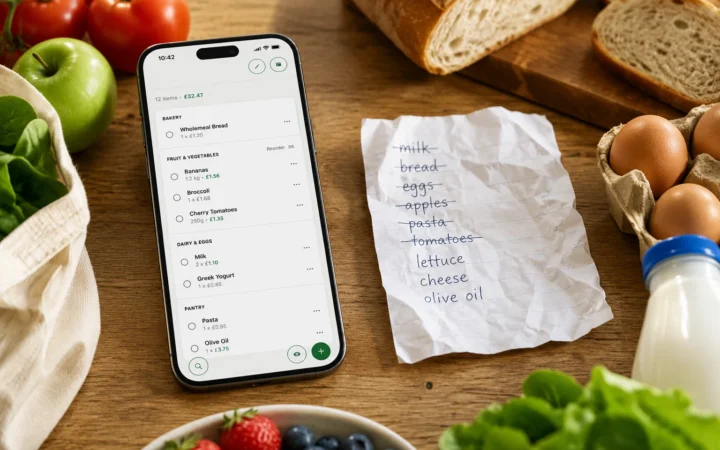
The shopping list is the oldest and most effective tool we have. But a generic list, scribbled on the fly as you pull into the car park, isn't a strategy: it's just a partial reminder of whatever you happened to think of at the time.
The real difference comes from a list organised by department.
When you already know that apples are in produce, that passata is in aisle 4, that washing-up liquid is at the far end — you can move through the store in a straight line rather than zigzagging back and forth. You save time, but more than that: you reduce opportunities for distraction. Fewer unplanned stops in front of shelves means fewer items that end up in the trolley without being on the list.
And if you shop at the same place every week — which most of us do — that mental map becomes an asset that sharpens with every visit.
How Spesary helps you build your own route
Spesary is designed precisely for this: not just to track what you need to buy, but to help you do it more intelligently over time.
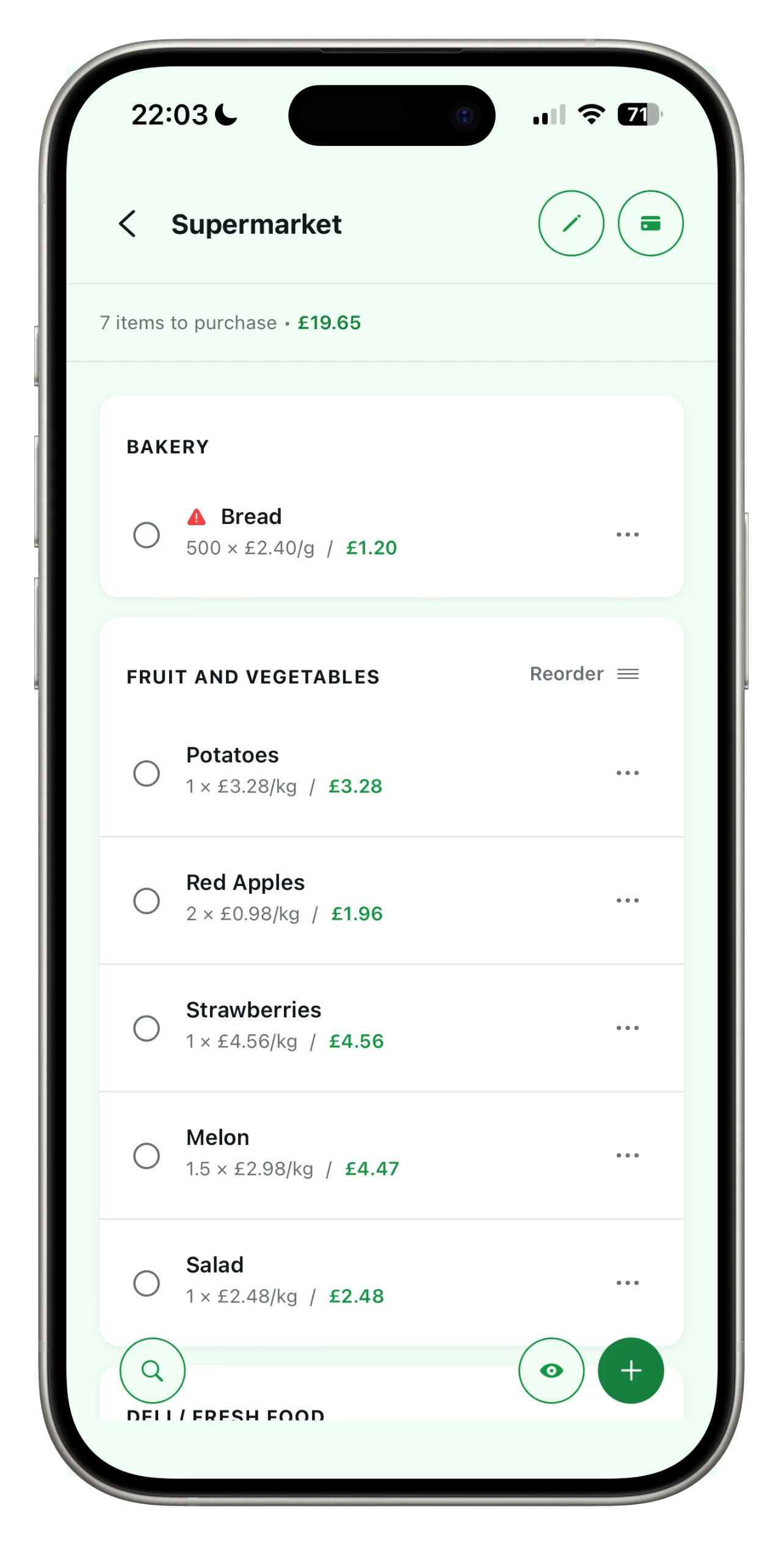
Spesary's permanent lists aren't scraps of paper. They're living lists — ones that build up habits, adapt to the seasons and, most importantly, stay organised. You can assign each product to a specific department, gradually building a personalised map of your regular store.
The first time you set it up, it might take a few extra minutes. But from the second shop onwards, your list will already be grouped the way you need it: produce first, then dairy, then frozen, then cleaning products. No more unnecessary laps because you forgot that the parmesan was on the other side.
And if you shop at more than one place — perhaps a supermarket during the week and a market on Saturday for bread and fruit — you can create separate lists, each organised according to the layout of that particular store. Every place with its own optimised route.
For families or couples who share a list, the benefit multiplies: everyone knows where to find what, and whoever arrives first can get started without waiting or sending a flurry of messages about what was missing.
Shopping as a routine, not an adventure
There's something genuinely freeing about having a system. Not every shop needs to be an exploration. Sometimes you just want to walk in, get what you need, and leave — without distractions, without forgetting things, without that nagging feeling that you picked up things you didn't need and missed things you did.
Supermarkets are designed to slow you down. A well-organised, department-sorted list is the simplest — and most underrated — way to take back control of your time and your trolley.
And over time, that list becomes something more: it becomes your habit, your rhythm, your way of doing the weekly shop.