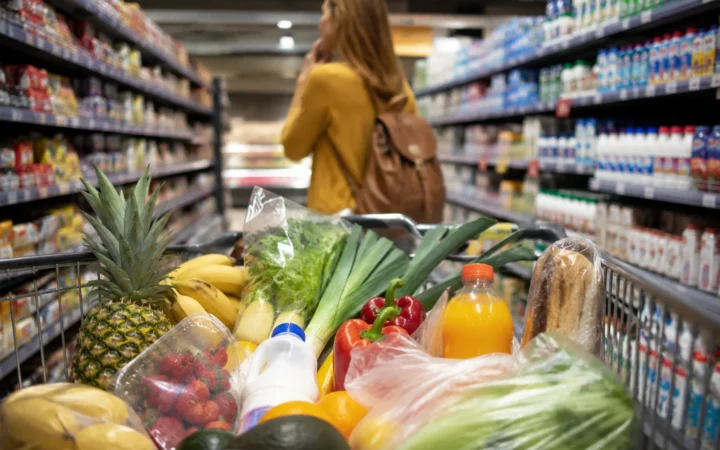
Three yoghurts for the price of two. Six kitchen rolls instead of four. A free pack of biscuits when you buy a second. The yellow label with the discount percentage sits at the top of the shelf, and something inside you already feels like you're winning — before you've even made a decision.
That feeling — the small thrill of a bargain — is exactly what promotions are designed to make you feel. And they work brilliantly. Even when, if you do the maths properly, you're not saving anything at all.
The saving you don't see
Let's start with an obvious observation that's surprisingly easy to overlook: a promotion only saves you money if you would have bought that product anyway, in that quantity, at that moment.
If the tinned tomatoes on a buy 2 get 1 deal cost £1.29 each and you take three, you spend £2.58 instead of £3.87. You've saved £1.29. But if you already have two tins at home and the third will expire before you use it, those £2.58 aren't a saving — they're a spend you wouldn't have made.
The paradox of promotions is that they make us focus on what we're not paying rather than what we are spending. The word "free" or "complimentary" has an almost hypnotic effect on the brain, which perceives a gain far more intensely than an equivalent loss — a well-documented phenomenon in behavioural psychology known as loss aversion.
Stockpiling: when stocking up becomes a hidden cost
There's a widespread practice among deal-conscious shoppers: stockpiling — buying promoted products in bulk to have them available later. On the surface it seems like a smart strategy. In practice, it often hides costs that never get accounted for.
The first is physical space. Filling your cupboards, fridge or garage with products bought in excess quantities has a real cost — even if you don't pay for it directly. It takes up space that could be used differently, creates clutter and makes it harder to keep track of what you already have.
The second is spoilage. Fresh products, but also many packaged ones, have an expiry date. Buying six jars of pasta sauce because they're on offer only makes sense if you'll get through them before they expire. If part of the stockpile ends up in the bin, the saving shrinks or disappears entirely.
The third, more subtle cost is accelerated consumption. Behavioural research shows that people tend to consume products faster when they have an abundance of them at home. That jumbo pack of crisps or the six yoghurts bought on promotion often get finished much sooner than they would have been in normal quantities. The saving translates into increased consumption, not reduced spending.
The maths of percentages
Another mechanism promotions exploit is the difficulty we have in comparing prices directly. Discount percentages are designed to look bigger than they actually are in absolute terms, and the price per kilogram or litre — the figure that would allow a genuine comparison — is often printed in small type in an inconspicuous position on the label.
Consider this straightforward example. A 500g pack costs £1.80: the price per kilo is £3.60. A 1kg pack of the same product, with no promotion at all, costs £2.90: the price per kilo is £2.90. The larger format, with no yellow label and no discount percentage, is actually significantly cheaper than the smaller promoted pack.
This happens regularly, across many different categories. The promoted format is almost never the one with the best unit price. It's the one the supermarket wants to shift at that moment — to clear a stock surplus, to hit a commercial target with a supplier, to free up shelf space.
The promotions that actually make sense
With all that said, promotions aren't the enemy. Some genuinely are worth it, and knowing how to recognise them is part of shopping wisely.
One app for your whole household
Shopping lists and loyalty cards on every device — free to start, Pro when you want to share in real time.
They make sense when they involve non-perishable products you use regularly — detergents, toilet paper, tinned goods, pasta — and when the promoted quantity fits within your normal consumption over a reasonable timeframe. In that case, you're bringing forward a purchase you would have made anyway, at a lower price.
They make sense when you know the reference price. If you know that particular washing powder normally costs £4.90 and you find it for £3.20, you have concrete information to evaluate whether it's genuinely worth it. If you don't know the base price — if it's the first time you've bought that product, or you don't remember what it cost last time — the discount percentage is just a number without any context.
They almost never make sense for fresh products you won't use in time, for jumbo formats of products that deteriorate after opening, for items you wouldn't have bought without the promotion, and every time you find yourself justifying a purchase with the phrase "it's cheap anyway."
Tracking prices changes everything
The difference between someone who falls for promotions and someone who uses them to their advantage comes down to one thing: price memory.
A shopper who knows what they normally pay for a product can instantly evaluate whether an offer is genuine or just apparent. They can compare the promoted price with what they paid last time, with what they pay at another supermarket, with the unit price of an alternative format.
A shopper without that memory is always at a disadvantage. The only information available is what the supermarket chooses to show them — and that information is selected to encourage a purchase, not to help with an evaluation.
Keeping track of prices isn't a habit for obsessive accountants. It's simply having the context needed to make good decisions. And over time, that memory becomes an automatic reflex: you learn to recognise real prices, to tell genuine offers from marketing techniques, to buy according to your own habits rather than the stimuli of the moment.
How Spesary helps you stay one step ahead
Spesary is designed for exactly this: to help you build, over time, a price memory that belongs to you — not to the supermarket.
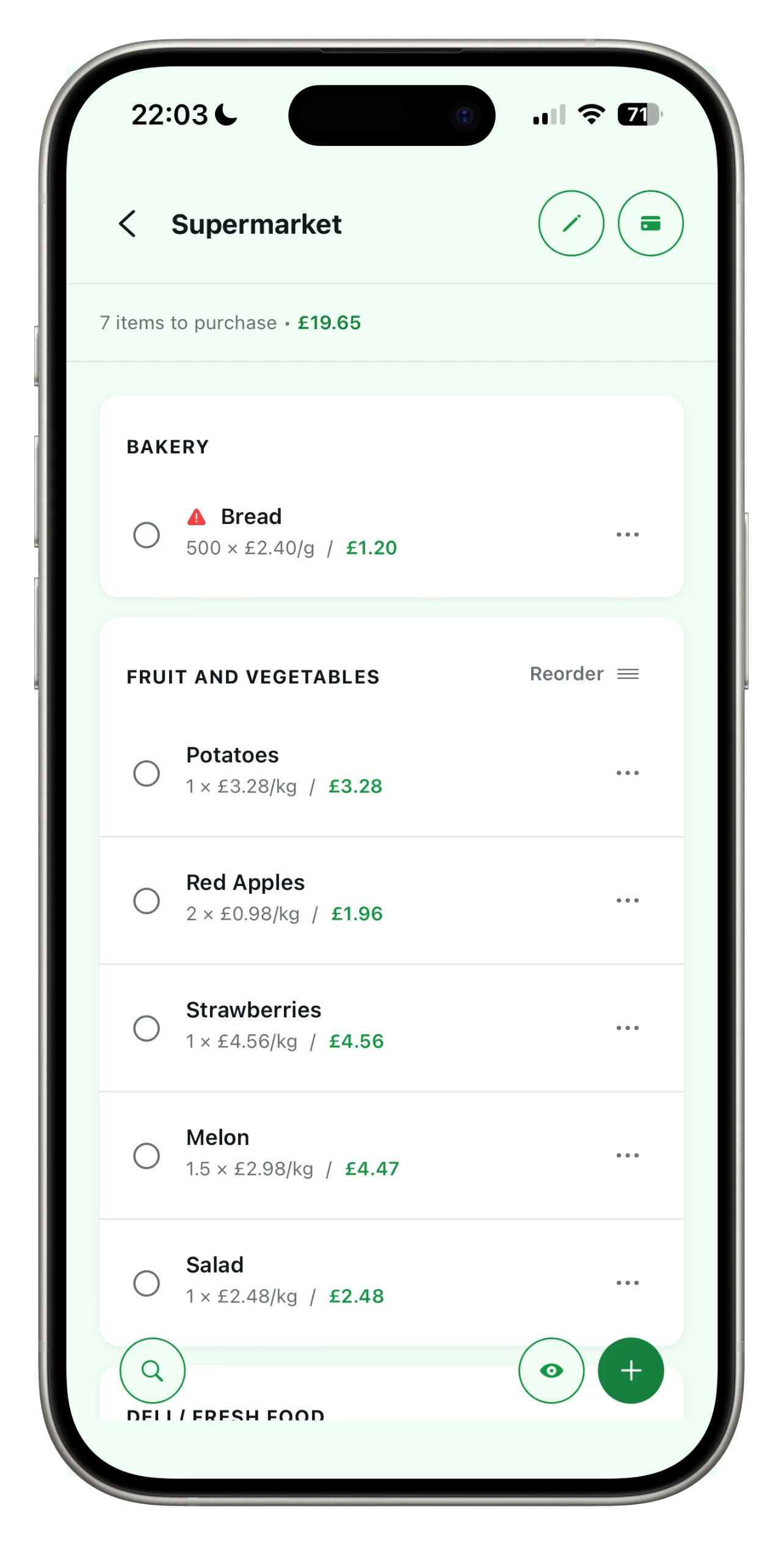
When you add a product to your list and record its price, you're building a personal archive that grows richer with every shop. The next time you see that yellow label, you don't have to trust the percentage printed on it: you can compare it against what you actually know.
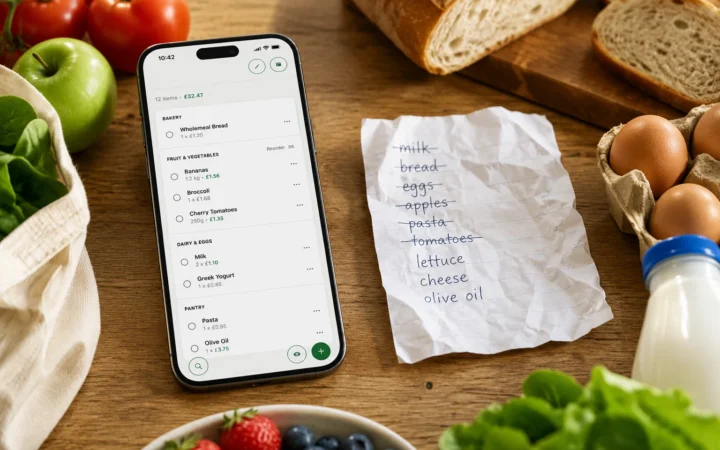
And when you shop with an organised list — by department, with the quantities you genuinely need — it's much harder to end up with three packs of something you hadn't planned for just because they were on offer. The list isn't a constraint: it's a reference point that lets you make conscious choices even in the face of the most cleverly designed promotions.
The best deals aren't the biggest ones. They're the ones you chose for yourself.