Sprouts have become a quiet staple of modern eating. You find them in salads, grain bowls, sandwiches — delicate, nutritious, and almost always eaten raw. That last detail is precisely what makes them, under certain conditions, a microbiological risk that's hard to control once it enters the supply chain.
Between January and May 2026, more than 109 people across eleven European countries — including the United Kingdom — were infected with Salmonella Bovismorbificans in what the ECDC (European Centre for Disease Prevention and Control) and EFSA (European Food Safety Authority) have classified as an ongoing outbreak. Eighteen people were hospitalised. In Finland, the most affected country with 35 confirmed cases, two deaths have been reported — both in patients with serious pre-existing conditions.
A supply chain that crossed half the world
Epidemiological investigations have traced a distribution chain that starts far from Europe. Alfalfa seeds — along with clover, broccoli, and radish seeds — were imported from India and distributed across several European countries via Italy. Sprouts produced in Italy are identified as the primary vehicle of infection. Laboratory testing detected the same Salmonella strain in the water used during sprout production in the Netherlands and the United Kingdom, allowing investigators to pinpoint a single common seed supplier.
According to investigators, the bacterium entered Europe in October 2025 through two shipments of alfalfa seeds, which were subsequently germinated and distributed over a timeframe that explains the geographical spread of cases.
Why sprouts are a high-risk food category
One app for your whole household
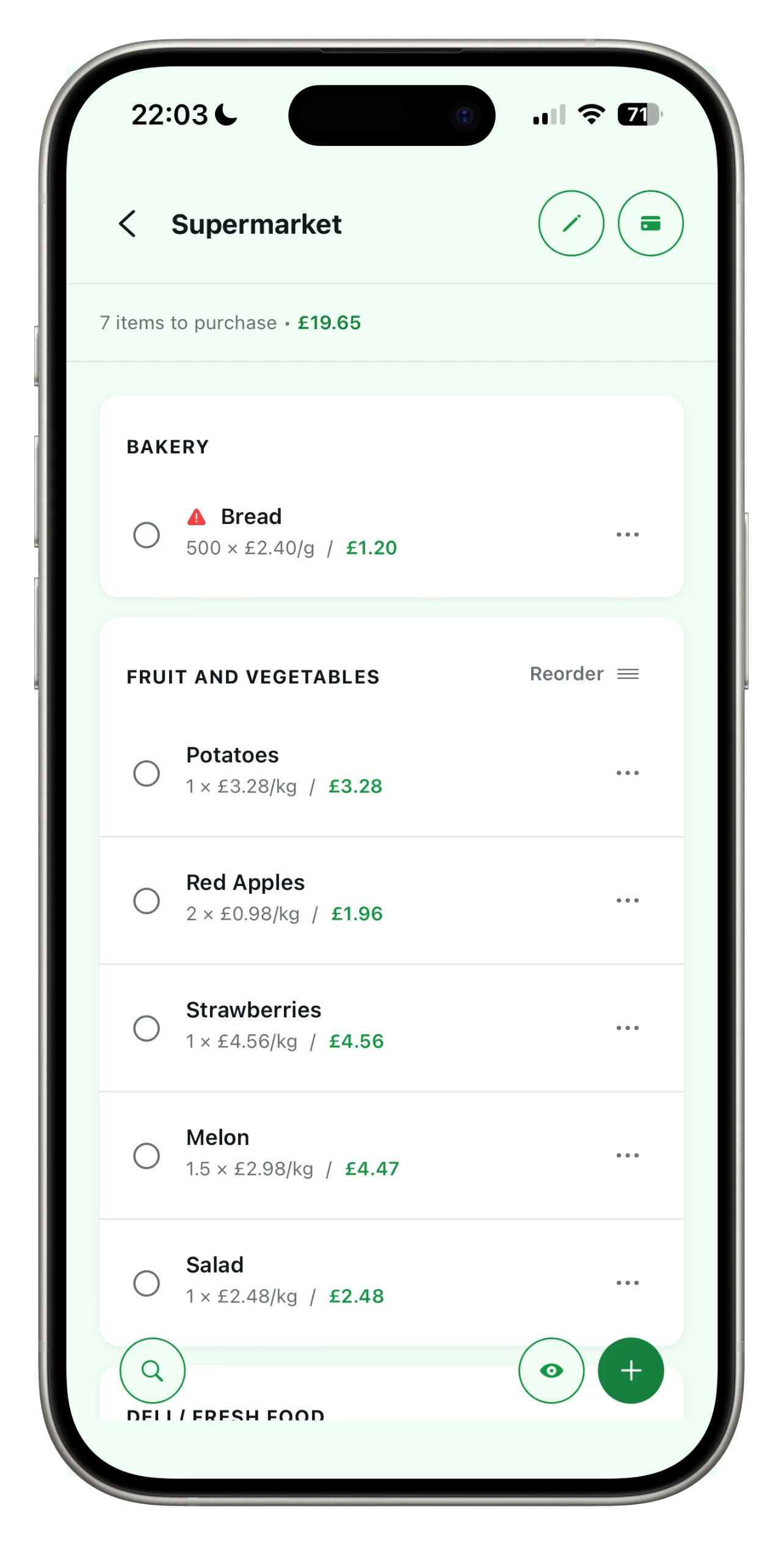
Shopping lists and loyalty cards on every device — free to start, Pro when you want to share in real time.
Sprouts grow in warm, humid conditions — environments that are equally ideal for bacterial proliferation. When seeds are contaminated at the source, the germination process itself can dramatically amplify the microbial load. This is a structural challenge with this type of product, not an isolated incident. And because sprouts are consumed raw, without the protective barrier of heat that would eliminate pathogens, the risk remains intact right up to the moment they're eaten.
What consumers should do
There are currently no specific recalls targeting consumers in Italy or the UK, but ECDC and EFSA warn that new cases may continue to emerge until the contamination source is fully identified and removed from the supply chain. Authorities recommend extra caution, particularly for vulnerable groups: children, the elderly, pregnant women, and people with compromised immune systems. If you experience diarrhoea, fever, abdominal pain, or vomiting after eating sprouts, contact your GP.
The traceability problem in everyday shopping
This case highlights something that tends to go unnoticed: fresh produce — seemingly the most "natural" and wholesome choice — can travel through supply chains far more complex than they appear. Knowing the origin of what we put on the table isn't overcaution. It's awareness.