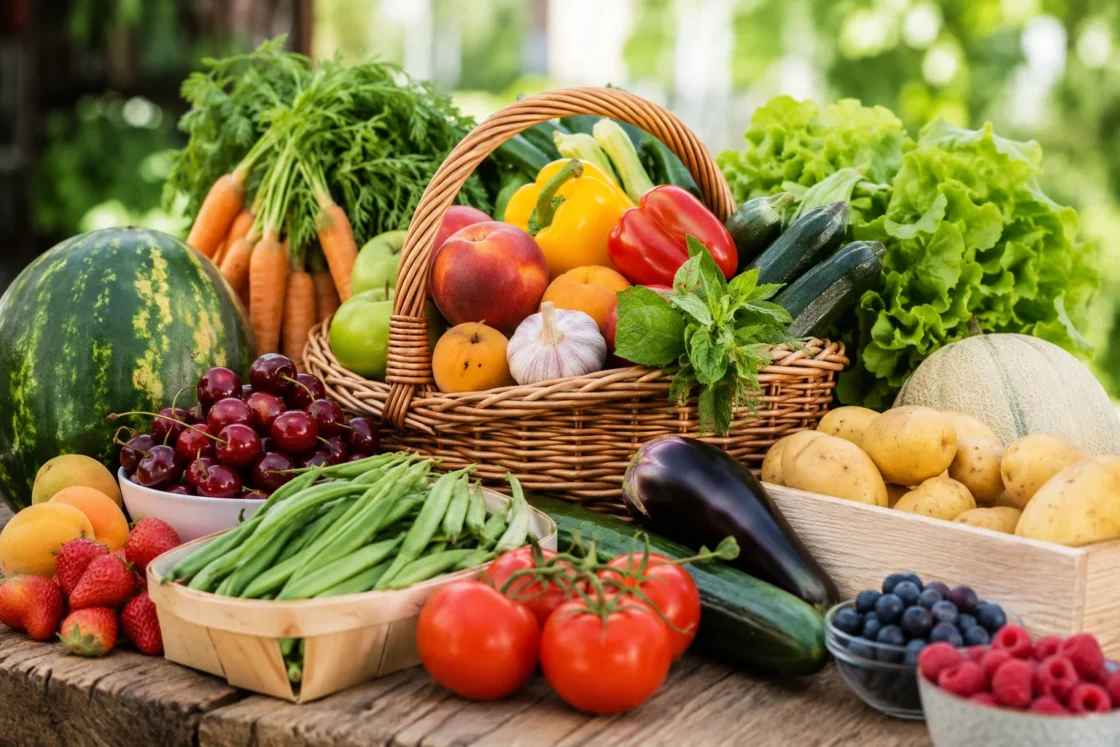
Summer is the most generous season of the year when it comes to fruit and vegetables. Market stalls and supermarket shelves fill up with colours you rarely see at other times of year — deep reds, brilliant yellows, fresh greens — and flavours reach their natural peak. It's the time of year when eating well costs less, not more.
Yet it's easy to fall into the trap of habitual shopping — always the same things, all year round, without thinking about what's actually in season. The result is fruit and vegetables that have travelled thousands of kilometres to reach your trolley, less flavourful, less nutritious and more expensive than what you'd find simply by looking at what's in season right now.
This guide brings together everything worth buying in summer — with a few tips on how to choose it well.
Why buying seasonally really does make a difference
Before getting into the list, it's worth understanding why seasonality matters — not just for your wallet, but for the quality of what ends up on your plate.
Flavour: fruit and vegetables harvested at natural ripeness develop sugars, aromas and textures that greenhouse-grown or early-picked produce simply can't replicate. An August tomato from a local market barely resembles the one you find in January.
Nutrients: the concentration of vitamins and antioxidants is higher in fresh, seasonal produce. The longer the time between harvest and your plate, the more nutritional value degrades.
Price: when a product is abundant on the local market, the price drops. Buying strawberries in May or aubergines in August means paying less for better quality.
Environment: fewer food miles, fewer heated greenhouses, fewer preservatives. The seasonal choice is almost always the more sustainable one too.
Summer fruit: what to buy right now
Summer is a paradise for fruit lovers. Here's what to look for in June, July and August — and how to spot the best produce.
Watermelon The queen of summer. Available from June through to September. To choose a good one: tap the surface — the sound should be deep and hollow, not metallic. It should feel heavy for its size and have a yellow patch on the underside (a sign it ripened in the sun on the ground). Buy it whole if you'll use it within a few days, pre-cut if you want it straight away.
Melon The quintessential summer fruit — cantaloupe, honeydew, Galia. Ripeness shows in the aroma: a ripe melon smells intensely fragrant even before it's opened. The end opposite the stalk should give slightly when pressed. Buy it just before you plan to eat it — a ripe melon doesn't keep.
Peaches and nectarines Available from June to August. Choose peaches with no green patches on the skin, that give slightly under pressure without being mushy. Nectarines should have smooth, glossy skin. Avoid very hard ones — they ripen very little once off the tree.
Apricots Earlier than peaches — the peak is between late May and July. Choose ones with deep orange colour, no green patches, and flesh that gives slightly. They're perishable: buy in moderate quantities and eat within a few days.
Cherries Among the first summer fruits — May and June. Choose ones with green, firmly attached stalks, glossy skin and no bruising. Colour ranges from bright red to almost black depending on the variety — it doesn't necessarily indicate ripeness.
Figs Two seasons: early figs in June–July, main crop from August to October. Choose them soft to the touch, with small cracks in the skin (a sign of sweetness), and no mould. Figs are among the most perishable fruits — eat them within a day or two of buying.
Plums Available from July to September in many varieties. Choose ones with slightly matt, naturally bloom-dusted skin (the white coating is natural), no bruising. The flesh should give slightly under pressure.
Berries Strawberries, blueberries, raspberries, blackberries — peak season is June to August. Choose punnets with no crushed or mouldy fruit at the bottom. Berries don't ripen after picking — buy them already ripe and eat them quickly.
Grapes Early varieties anticipate autumn from August onwards. Choose bunches with firm, plump berries, matt skin and a green stalk. The berries shouldn't fall easily from the bunch.
Summer vegetables: what to buy right now
Summer brings some of the most versatile and flavourful vegetables of the year to the table. Here are the key ones and how to recognise quality when you're shopping.
Tomatoes The symbol of summer. Available from June to September in endless varieties — beefsteak, cherry, ribbed, plum, San Marzano. Choose tomatoes with taut, unwrinkled skin, fragrant even before cutting, and heavy for their size. Don't store them in the fridge — cold stops ripening and destroys the flavour.
Aubergines A cornerstone of Mediterranean summer cooking. Available from July to September. Choose ones with glossy, taut skin and no soft patches or dark spots. They should feel heavy for their size. Younger, smaller aubergines tend to be less bitter.
Courgettes Available almost all year, but peak quality is in summer. Choose small, firm ones — large courgettes tend to be watery and less flavourful. The skin should be bright and unscratched. Courgette flowers, when available, are a seasonal treat not to be missed.
Peppers Red, yellow and orange peppers reach full ripeness in summer — green ones are harvested earlier. Choose peppers with smooth, glossy, unwrinkled skin, heavy with a fresh-looking stalk. Ripe peppers (red and yellow) are sweeter and easier to digest than green ones.
One app for your whole household
Shopping lists and loyalty cards on every device — free to start, Pro when you want to share in real time.
Cucumbers Perfect for summer — fresh, hydrating, light. Choose firm ones with even green colour and no yellow patches. Smaller cucumbers are generally crunchier with fewer seeds. Store in the fridge and eat within a few days.
Green beans Available from June to August. Choose thin, firm ones that snap with a clean crack — a sign of freshness. Avoid beans with wilted tips or wrinkled skin.
Sweetcorn Fresh corn on the cob is a completely different experience from the tinned variety. Available from July to August. Choose cobs with firm, tightly packed kernels, green husks and brown but not dry silks. Fresh corn deteriorates quickly — cook it the same day you buy it.
Basil Technically an herb, but impossible not to mention in a summer shopping guide. Fresh basil is at its best in summer — fragrant, tender, abundant. Buy it in a pot if you want it to last, as a bunch if you're using it straight away. Don't store it in the fridge — cold blackens the leaves.
Spring onions and chives Fresh, delicate, perfect for salads and light summer dishes. Choose spring onions with bright green, firm leaves and a white, solid bulb.
Radishes Crunchy and refreshing, perfect for summer salads. Choose ones with fresh-looking leaves and a firm bulb. Best eaten within a few days of buying.
Where to buy for the best quality
Seasonality expresses itself most fully through certain shopping channels. Not all shops offer the same level of seasonal quality.
Local market or farmers' market The best choice for seasonal fruit and vegetables. Produce often arrives the previous day or that morning, traceability is immediate (you can ask the grower directly) and prices are generally lower than supermarkets for local products.
Community Supported Agriculture (CSA) or veg box scheme If there's a local veg box scheme in your area, summer is the best time to join — the variety of local produce is at its maximum.
Local farm box delivery Many local growers offer seasonal fruit and vegetable boxes for home delivery or collection points. They're often more affordable than the supermarket for superior quality produce.
Supermarket Less ideal for seasonality, but convenient. Look for products with a clear country-of-origin label, preferably local or from nearby regions. Avoid packaged produce with no provenance information.
How to organise your summer shopping without waste
Buying seasonal fruit and vegetables in summer is economical — but it's also easy to buy too much and end up with produce that wilts before it's eaten. A few practical rules to avoid waste.
Buy in small quantities and often — summer fruit and vegetables ripen quickly. It's better to shop two or three times a week than to do a huge shop on Monday and find soft tomatoes by Thursday.
Know what goes in the fridge and what doesn't — tomatoes, basil, peaches, melon: out of the fridge. Courgettes, green beans, cucumbers, grapes: in the fridge. Storage mistakes are the leading cause of waste.
Plan your meals before you shop — buying with only a vague idea of what to cook almost always leads to buying too much. Deciding on two or three recipes in advance guides the shopping towards what you'll actually use.
Make the most of surplus — if your tomatoes are starting to soften, make a sauce. If the peaches are too ripe to eat as they are, make jam or a smoothie. Summer surplus is raw material for preserves, jams and things to freeze.
Organise everything with Spesary
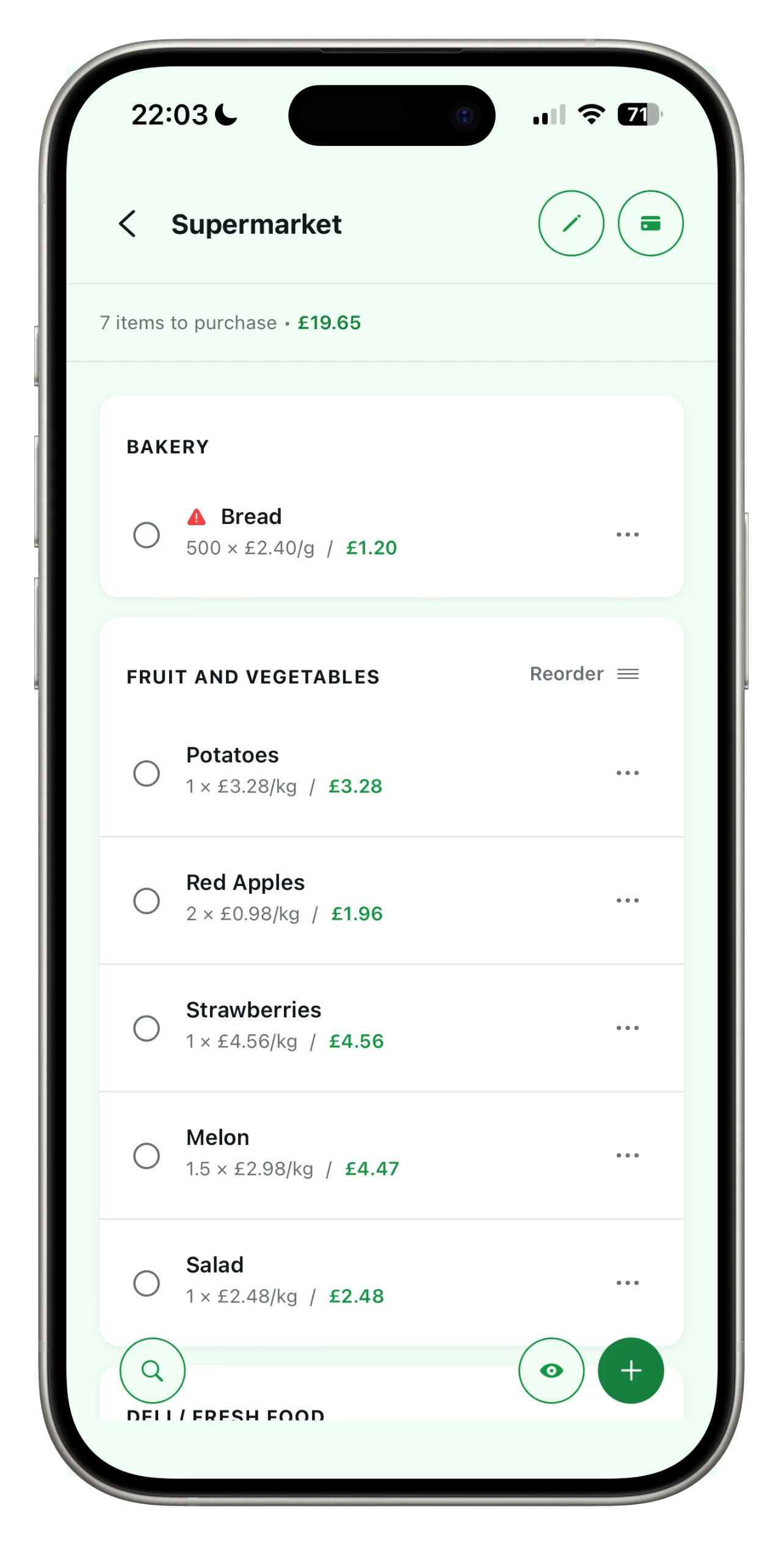
The summer fruit and vegetable shop is frequent, variable and often shared — between partners, housemates, whoever goes to the market and whoever passes by the supermarket. With Spesary you can build your weekly list by category, update it in real time and share it with whoever shops alongside you.
Less waste, fewer forgotten items, more time to enjoy the flavours of summer.